
Custom lead lists vs B2B databases comes down to focus versus breadth. A B2B database gives you a broad, searchable starting point, while a custom lead list is researched around the specific companies, roles and criteria your team wants to reach.
The right choice depends on how precise your targeting needs to be, how much research your team can handle and whether your existing data is ready to use.
What a B2B database is good for
A B2B database is a searchable collection of company and contact records. It can help a sales or marketing team explore a market, build an initial audience and find possible contacts by criteria such as industry, role or location.
It is most useful when you need breadth and a quick way to create an initial prospect pool. It can also help teams test a market or identify segments worth researching further.
A database is a starting point, not a guarantee that every record fits your ideal customer profile or is current. Before outreach, review whether the company still fits your criteria, whether the contact has the right role and whether the details are complete enough for your workflow.
What a custom lead list adds
A custom lead list is built around a defined brief. Instead of starting with every possible match in a broad database, the research focuses on the companies and contacts that meet your team's chosen criteria.
A useful brief can include:
- The industries and company types you want to reach
- The roles or decision-makers relevant to your offer
- Geographic or other business-fit criteria
- The fields your team needs for qualification and outreach
Custom research can be helpful when your audience is narrow, your criteria are specific or your team needs additional context before deciding who to contact.
The quality of the list depends on the clarity of the brief and the checks applied to each record. Agree on required fields and how uncertain details should be handled before the work begins.
Custom lead lists vs B2B databases: how to choose
Use a B2B database when you need a broad starting point, want to explore a market or already have a process for filtering and checking records.
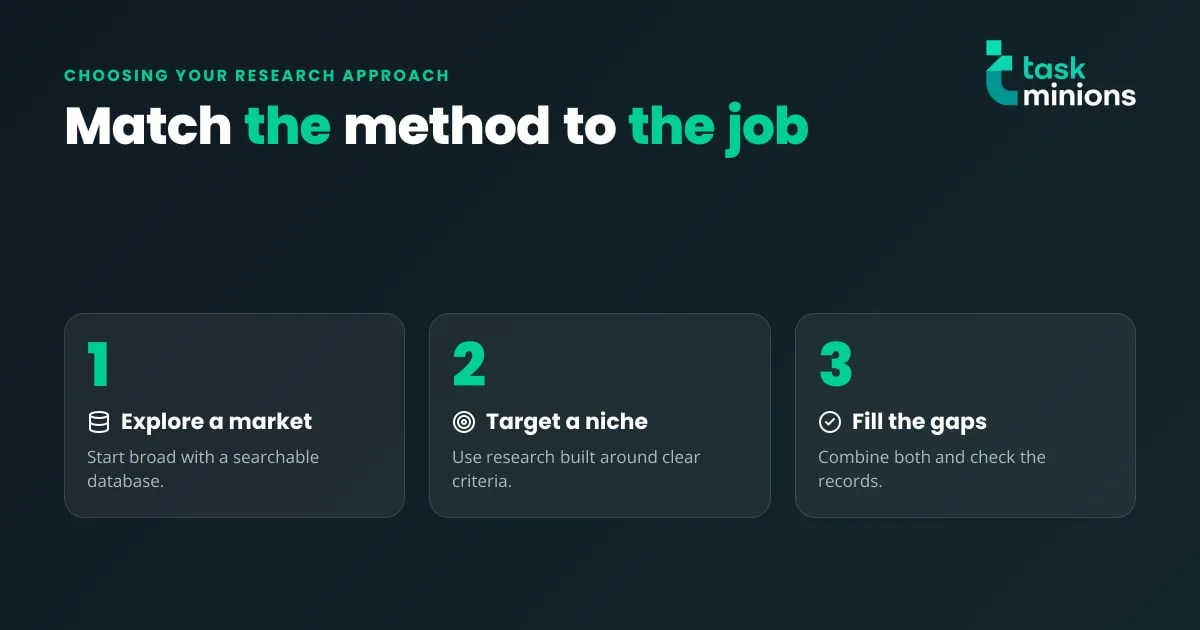
Choose a custom lead list when the target audience is specific, the criteria need careful interpretation or your team wants research organized around a defined campaign.
In some workflows, the two approaches complement each other. A database can help identify a broad pool, while focused research can narrow that pool, check relevant details and fill gaps in the fields your team needs.
| Your situation | A practical starting point |
|---|---|
| You are exploring a new market | Start with a broad database search |
| You have a tightly defined ideal customer profile | Brief a custom research project |
| Your existing list has gaps | Review and enrich the records you already have |
| Your team needs a specific set of fields | Define the fields before sourcing |
| You have a list but are unsure it is usable | Check formats, duplicates and missing details |
How to make either approach more useful
Start by writing down what makes a prospect a good fit. Include the company criteria, relevant roles and the information your team needs to decide on the next step.
Then define a consistent record format. Decide how company names, job titles, locations and contact details should be entered. This makes records easier to review and reduces avoidable cleanup.
Next, agree on a verification process. A person should check that each record meets the brief and flag information that cannot be confirmed. Keep uncertain fields visible rather than treating them as complete.
Finally, connect the list to the way your team works. Use the agreed fields and formats in your CRM or spreadsheet, and make ownership of future updates clear.
If you are comparing this work with internal prospecting capacity, consider the full process, not just the initial search. Research, cleanup, checking and formatting all take attention. Our guide to ICP list building covers how to define, source and verify prospects.
When to outsource lead research
Outsourcing can make sense when prospect research is recurring, takes time away from sales activity or requires a consistent process your team cannot maintain internally.
Before handing it off, provide a clear sample of a good-fit record, the required fields, the sources or research boundaries to use and the way exceptions should be reported. Start with a sample or trial so both sides can review the format and expectations.
TaskMinions provides B2B list building support as part of one dependable remote team. The work is handled by real people, and records are checked by a person. You can learn more about B2B list building.
Choose the approach that fits your workflow
A database is useful for breadth. A custom list is useful for focused research. Many teams benefit from being clear about the goal first, then choosing the process that produces records they can actually use.
If you want to discuss the audience, fields and research process for your next list, book a free call.
Frequently asked questions
Is a custom lead list better than a B2B database?
Neither is always better. A database offers a broad starting point, while a custom lead list focuses research on your defined companies, roles and criteria. Choose based on how specific your audience is and how much checking your team needs.
Can I use a B2B database and custom research together?
Yes. A database can help identify a broad pool, and custom research can narrow it, check details and organize records around your campaign criteria.
When should a business outsource lead research?
Consider outsourcing when research is recurring, takes time away from sales work or needs a consistent process your team cannot maintain internally. Provide clear criteria and review a sample first.
What should I include in a lead list brief?
Include company-fit criteria, target roles, geography where relevant, required fields, record format and instructions for flagging uncertain information.